
Procedures
What if Radiofrequency Ablation Doesn’t Work?
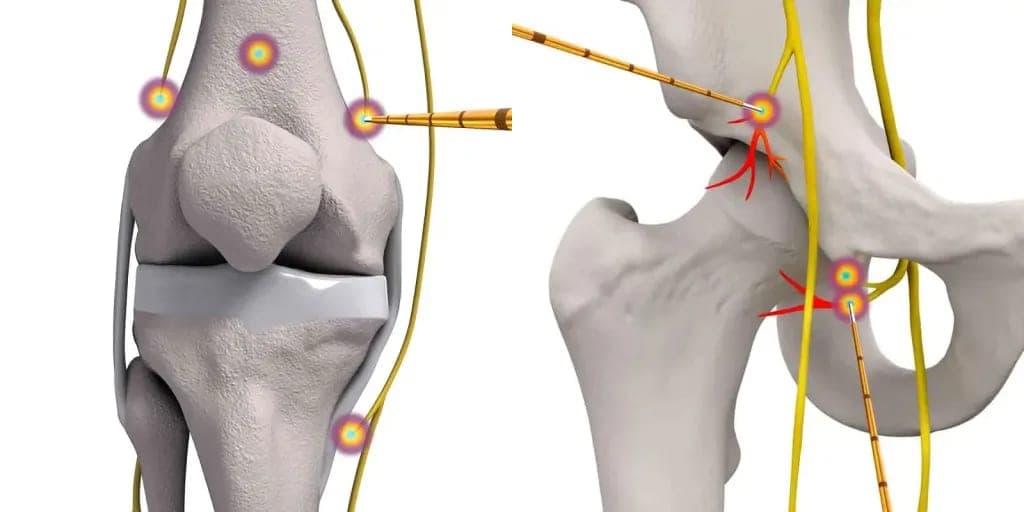
Why radiofrequency ablation sometimes gives less relief than hoped, how a pain doctor looks for the reason, and the other options worth discussing.
At HTx Pain Institute, we pride ourselves on offering some of the most advanced treatments in Pain Management in Houston, TX. One of the advanced procedures we utilize is Radiofrequency Ablation. For the recovery timeline, read What to Expect After a Radiofrequency Ablation.
But like any medical treatment, it might not always produce the desired results for every patient. If you have tried radiofrequency ablation and have not had the relief you were hoping for, it helps to know you still have options.
Understanding Radiofrequency Ablation
Before looking at other options, it helps to know what radiofrequency ablation is. This minimally invasive procedure uses an electrical current produced by a radio wave to heat up a small area of nerve tissue. The goal is to decrease pain signals from that specific area.
It is often discussed for chronic pain, especially in the lower back and neck. Many patients find it helps. Like all medical treatments, it does not guarantee a result.
Reasons Radiofrequency Ablation Might Not Work
There could be various reasons why Radiofrequency Ablation doesn’t bring about the expected relief:
- Misidentified Pain Source: Sometimes, the exact source of pain might be misidentified, and the treated nerve might not be the primary pain generator.
- Technical Factors: Inaccuracies in needle placement or the area being too broad or narrow can influence the procedure’s effectiveness.
- Individual Variability: Everyone’s body reacts differently. Some might experience relief immediately, while others may find that the pain relief is only partial or temporary.
What Next? Exploring Alternatives at HTx Pain Institute
Should you find yourself among those for whom Radiofrequency Ablation did not work as expected, our Pain Management Clinic offers other treatments. Your Pain Medicine Physician at HTx Pain Institute is dedicated to finding the right solution tailored to your needs.
- Medications: While medications are often used in tandem with other treatments, adjusting dosages or trying new medications can sometimes provide better pain relief.
- Physical Therapy: A regimen designed by a physical therapist can help alleviate pain by improving physical strength, endurance, and flexibility.
- Epidural Steroid Injections: Administered directly into the painful area of the spine, these injections can provide relief from inflammation.
- Spinal Cord Stimulation: A device is implanted beneath the skin to send a mild electric current to the spinal cord, helping mask pain signals.
- Basivertebral nerve ablation (BVN): For vertebral endplate pain, basivertebral nerve ablation (BVN) targets that nerve and leaves no implant behind.
- Other Ablative Techniques: There are other techniques, like chemical neurolysis, where chemicals are used to destroy the problematic nerve.
The Importance of Communication
Keep open communication with your pain doctor. If Radiofrequency Ablation or any other treatment doesn’t yield the desired outcomes, your feedback is invaluable. By understanding your experience, our Pain Medicine Physician can recalibrate the treatment approach, ensuring a more targeted and effective solution.
Conclusion
At HTx Pain Institute, we understand the frustration when a treatment does not deliver as hoped. The next step is a careful look at the cause and at other options, including care for back pain, neck pain, and, when the pain is vertebrogenic, basivertebral nerve ablation (BVN).
Common questions
- Most people notice a change within a few weeks. Track your pain and daily activity and bring that to your follow-up visit.
Go Deeper
Full clinical detail on Radiofrequency Ablation
For the complete picture, including candidacy, what to expect, and answers to common questions, visit our Radiofrequency Ablation page.
View Radiofrequency AblationMedically Reviewed
Reviewed by Edward Baumgartner Jr., MD · Last reviewed . Information on this page is not medical advice. Always consult your physician.
Ready When You Are
Get the care you deserve. Schedule your consultation today.
Two Houston-area locations. Same-week consults available. Most insurance accepted.