
PRP
PRP (Platelet-Rich Plasma)
Your body's own healing factors, concentrated and delivered.
Treatment Overview
Built around the patient — not the procedure.
Platelet-rich plasma (PRP) therapy uses a concentrated preparation of your own platelets — rich in growth factors — to accelerate healing in joints, tendons, and soft tissues. It is non-surgical, biologically derived from your own blood, and increasingly used as a first-line option for select musculoskeletal conditions.
Quick Facts
- Setting
- In-office, ~60-minute visit
- Anesthesia
- Discussed at consult
- Recovery
- Return to activity as comfort allows
- Provided by
- Dr. Baumgartner
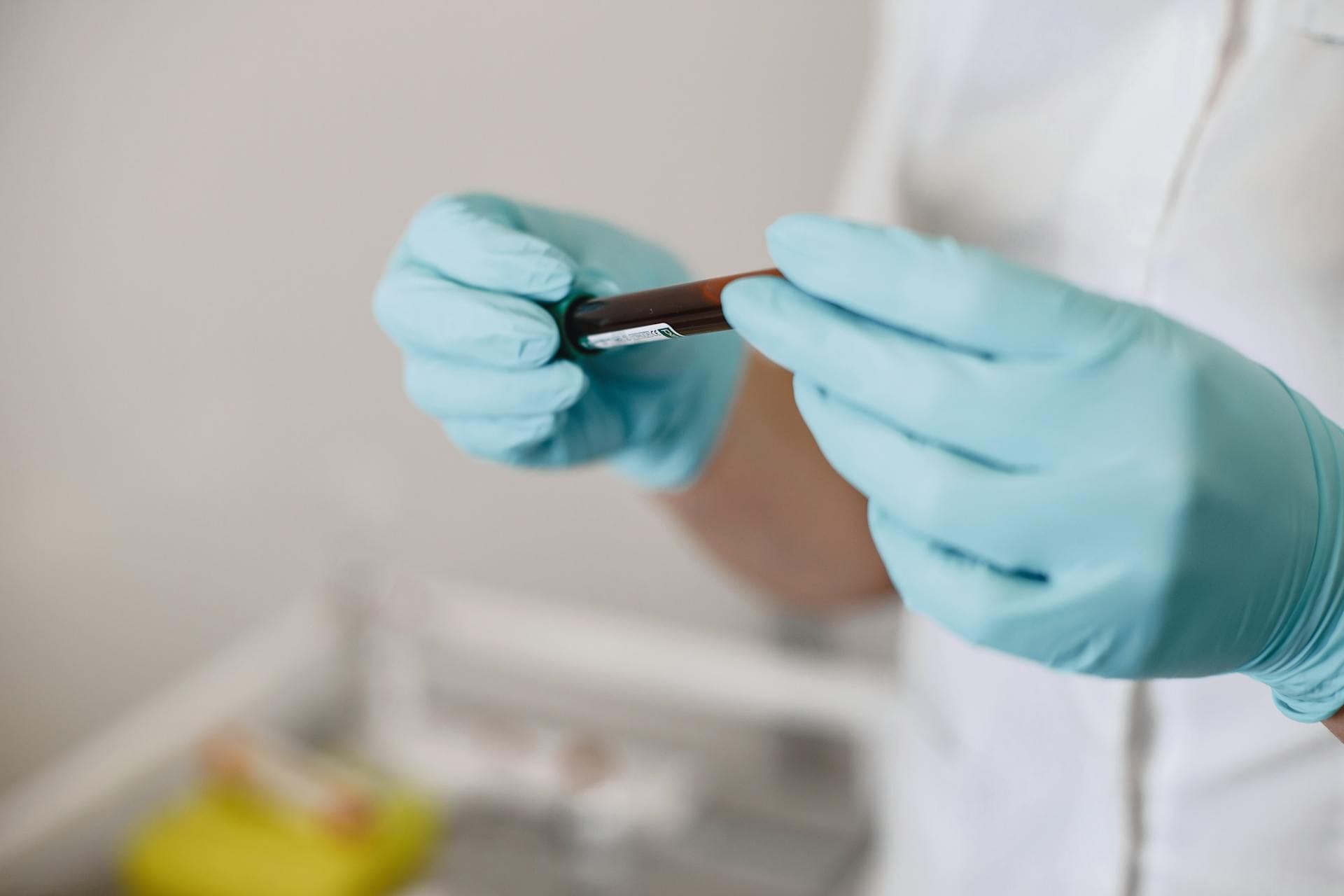
A clear, step-by-step approach.
- 1
A small blood draw is performed in our office.
- 2
The blood is processed in a sterile centrifuge to concentrate platelets.
- 3
Under ultrasound or fluoroscopic guidance, the PRP is injected directly into the injured tissue.
- 4
Growth factors stimulate the body's natural healing response.
Who is it for
- Tendinopathy (tennis elbow, rotator cuff, patellar tendon)
- Mild-to-moderate knee osteoarthritis
- Chronic ligament or joint pain unresponsive to conservative care
- Patients seeking biologic alternatives to repeated steroid injections
What to expect
- Total visit time is approximately 60 minutes.
- Mild soreness at the injection site is normal for 2–4 days.
- Hold anti-inflammatory medications (NSAIDs) for 7 days before and 2–4 weeks after, as directed by your provider.
- Improvement typically builds over several weeks, with continued improvement over the following months.
Recovery & results
- Most patients resume normal activity as comfort allows, guided by their provider.
- Gradual return to activity guided by symptoms.
- A series of 1–3 injections, spaced weeks apart, may be recommended.
- Many patients combine PRP with structured physical therapy.
Honest about what to expect.
Every procedure carries some risk. We explain everything in plain language during your consultation, and again on the day of the procedure — so you know what is normal, what to watch for, and when to call.
- Mild soreness or bruising at the injection site for 2–4 days.
- Temporary increase in pain during the first 1–2 weeks as the inflammatory healing response activates.
- Rare risk of infection at the blood-draw or injection site — minimized through sterile technique.
- Rare allergic or vasovagal reactions to the blood draw itself.
- PRP may not provide meaningful improvement in severe end-stage joint disease — careful patient selection minimizes this.
- Anti-inflammatory medications must be paused around the procedure, which can be a tradeoff for some patients.
Direct answers — no jargon.
If your question isn’t here, ask us at your consultation. We will give you the same answer in plain English.
- Most insurance plans do not currently cover PRP for musculoskeletal conditions, considering it experimental for some indications. We provide transparent self-pay pricing during your consultation. CareCredit and similar financing options are available.
We verify your benefits before your visit.
PRP therapy is generally not covered by commercial insurance or Medicare for musculoskeletal conditions. We provide transparent self-pay pricing for single sessions and series, and offer CareCredit financing for patients who would prefer to spread payment. We will tell you honestly whether PRP is likely to help in your specific case before you spend money.
Insurance & financing detailsQuick answers
- Will my insurance cover this? We check before your visit.
- Self-pay options? Yes, with transparent pricing.
- Financing? CareCredit and similar programs available.
Expertise
The standard of PRP care, raised to where it belongs.
We are conservative about PRP. We will not sell you a PRP series for a condition where the evidence does not support it. When PRP is right for you, we use image guidance — ultrasound or fluoroscopy — for every injection, prepare the PRP in our office under sterile technique, and structure the post-procedure plan to maximize the biology — including coordinated physical therapy and clear restrictions on anti-inflammatories.
What PRP (Platelet-Rich Plasma) is used for.
Knee Pain
Arthritis, tendon pain, and knees that still hurt after surgery, from the cartilage to the nerves that supply the joint.
Learn moreShoulder Injuries
Rotator cuff, labrum, and tendon issues — diagnosed precisely, treated thoughtfully.
Learn moreHip Pain
From bursitis to osteoarthritis — image-guided care for the hip joint.
Learn moreJoint Pain
From shoulder to hip — image-guided care for the joints that move you.
Learn moreSports Injuries
Get back to your sport — with diagnostics and biologics that respect the timeline.
Learn moreOther treatments we offer.
Radiofrequency Ablation
Outpatient procedure using precise electrical current to quiet damaged or inflamed nerves.
Learn moreInjections & Nerve Blocks
Image-guided injections that calm inflamed joints, nerves, and spinal structures.
Learn moreKyphoplasty
Minimally invasive procedure that stabilizes painful spinal compression fractures.
Learn moreMedically Reviewed
Reviewed by Edward Baumgartner Jr., MD · Last reviewed . Information on this page is not medical advice. Always consult your physician.
Ready When You Are
Get the care you deserve. Schedule your consultation today.
Two Houston-area locations. Same-week consults available. Most insurance accepted.