Spinal Cord Stimulation
Spinal Cord Stimulation
Reprogram pain at the source of the signal.
Treatment Overview
Built around the patient — not the procedure.
Spinal cord stimulation (SCS) is one of the most studied therapies in modern pain medicine. A small implantable device delivers tailored electrical fields to the spinal cord — interrupting pain signals before they reach the brain. Patients try the system through a temporary trial before committing to a long-term implant.
Quick Facts
- Setting
- Outpatient trial and implant
- Anesthesia
- Discussed at consult
- Recovery
- Light activity 4–6 weeks after implant
- Provided by
- Dr. Baumgartner
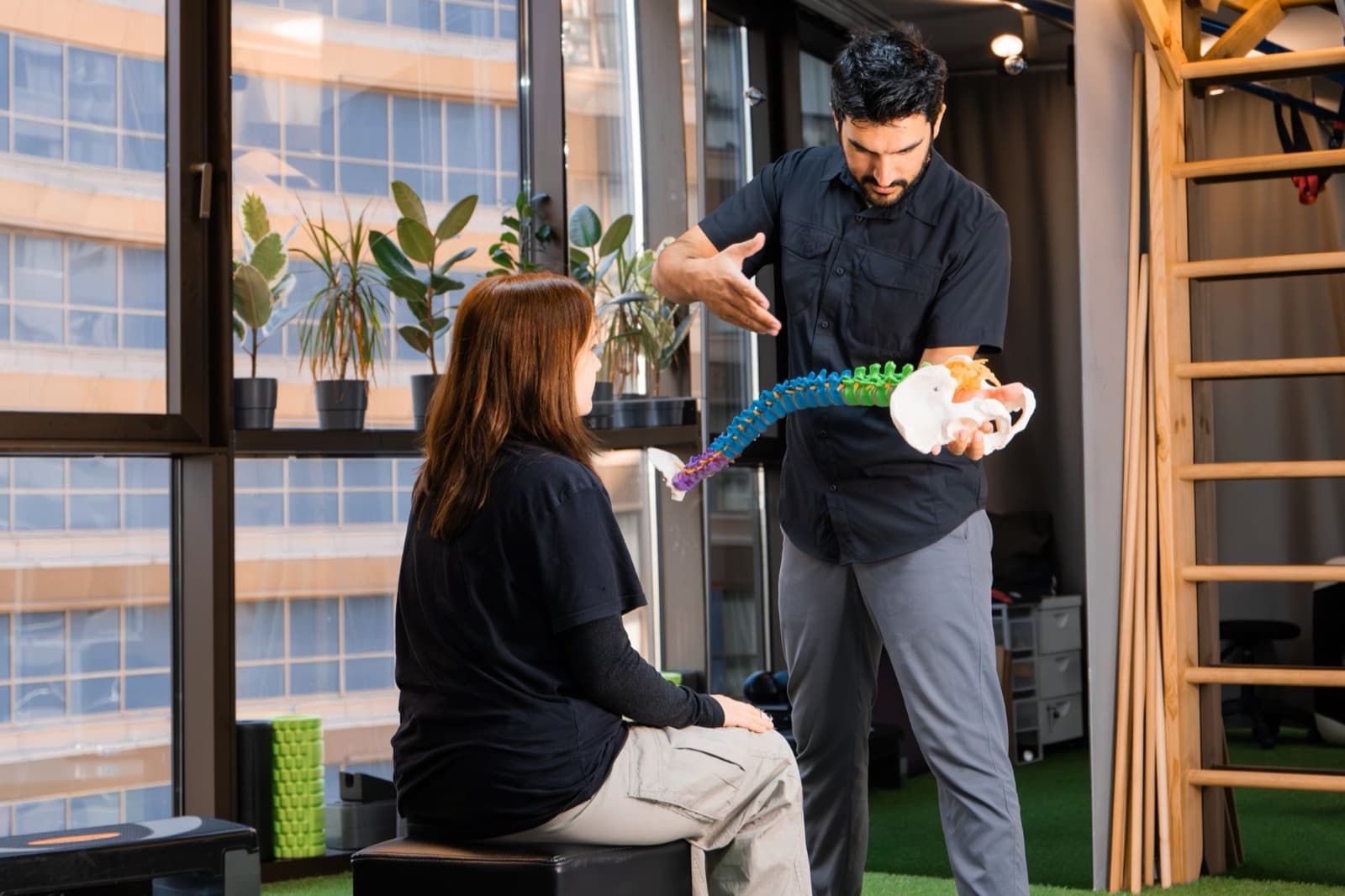
A clear, step-by-step approach.
- 1
Trial: temporary leads are placed for a 5–7 day in-home test.
- 2
If the trial reduces pain by ≥50% and improves function, we proceed to implant.
- 3
Permanent implant: leads and a small generator are placed in a brief outpatient procedure.
- 4
Therapy is fine-tuned remotely by our team using your feedback.
Who is it for
- Failed back surgery syndrome / persistent post-surgical spine pain
- Axial back pain — pain centered in the back itself rather than radiating into a limb
- Various neuropathies, including diabetic peripheral neuropathy
- Complex regional pain syndrome (CRPS)
- Refractory radicular pain
What to expect
- Trial procedure: 30–45 minutes, no incisions.
- Trial period: 5–7 days at home with the external device.
- Implant procedure: about 60 minutes, outpatient.
- Programming sessions to dial in the optimal therapy for you.
Recovery & results
- After the trial, leads are removed in seconds in-office.
- After implant, light activity for 4–6 weeks while the leads anchor.
- Most patients return to work within 1–2 weeks.
- Long-term follow-up to optimize programming as needed.
DRG Stimulation
When the pain stays in one specific place.
The dorsal root ganglion is a small bundle of sensory nerve cell bodies sitting just outside the spinal cord at each level. Every signal from one region of the body passes through it. DRG stimulation places a lead beside that ganglion rather than over the spinal cord itself.
In the United States, DRG stimulation is FDA-approved for complex regional pain syndrome of the lower limbs. It is also worth discussing when neuropathic pain has stayed in one defined area after a specific operation, such as a hernia repair or a knee replacement. The path is the same as standard SCS: a trial first, and an implant only if the trial works.
- Narrower target
- Traditional SCS covers a broad area, which suits pain spread across the back and down a limb. DRG concentrates coverage on a smaller, well-defined area such as a foot, a knee, or the groin.
- Steadier with position
- There is very little cerebrospinal fluid between the lead and the ganglion, so stimulation tends to stay consistent whether you are standing or lying down.
- Same trial-first path
- A temporary trial comes first, exactly as it does with standard SCS, and nothing is implanted unless the trial reduces your pain and improves what you can do.
Honest about what to expect.
Every procedure carries some risk. We explain everything in plain language during your consultation, and again on the day of the procedure — so you know what is normal, what to watch for, and when to call.
- Lead migration — uncommon with modern anchoring techniques but possible.
- Infection at the implant site — minimized through sterile technique and prophylactic antibiotics.
- Battery or hardware malfunction — rare and managed by the device manufacturer.
- Loss of effectiveness over time in some patients; reprogramming or revision can often address.
- Bruising or temporary discomfort at the incision sites.
Ready when you are.
Same-week consultations are typically available, and most major insurance is accepted.
Direct answers — no jargon.
If your question isn’t here, ask us at your consultation. We will give you the same answer in plain English.
- Modern paresthesia-free waveforms deliver pain relief without the older tingling sensation. Most patients are unaware of the device working in the background.
We verify your benefits before your visit.
Spinal cord stimulation is covered by Medicare, Medicare Advantage, and most major commercial insurance plans when criteria are met. Both the trial and permanent implant typically require prior authorization, which our team handles for you.
Insurance & financing detailsQuick answers
- Will my insurance cover this? We check before your visit.
- Self-pay options? Yes, with transparent pricing.
- Financing? CareCredit and similar programs available.
Expertise
The standard of Spinal Cord Stimulation care, raised to where it belongs.
Spinal cord stimulation is one of Dr. Baumgartner's areas of clinical focus. He has performed hundreds of SCS trials and implants since fellowship and works directly with the major device manufacturers — selecting the right system and waveform for each patient rather than defaulting to one platform.
What Spinal Cord Stimulation is used for.
Back Pain
The most common reason patients come to us — and where we have the most to offer.
Learn moreNeuropathic Pain
Burning, electric, or tingling pain caused by injury or irritation of the nerves themselves.
Learn morePost-Surgical Pain
When surgery resolved the issue but pain remained — interventional options that can help.
Learn moreSciatica
Radiating leg pain from compression or irritation of the sciatic nerve.
Learn moreChronic Pain
Pain that persists beyond expected healing — and the comprehensive plan it requires.
Learn moreOther treatments we offer.
Radiofrequency Ablation
Outpatient procedure using precise electrical current to quiet damaged or inflamed nerves.
Learn moreInjections & Nerve Blocks
Image-guided injections that calm inflamed joints, nerves, and spinal structures.
Learn moreKyphoplasty
Minimally invasive procedure that stabilizes painful spinal compression fractures.
Learn moreMedically Reviewed
Reviewed by Edward Baumgartner Jr., MD · Last reviewed . Information on this page is not medical advice. Always consult your physician.
Ready When You Are
Get the care you deserve. Schedule your consultation today.
Two Houston-area locations. Same-week consults available. Most insurance accepted.